Chop Sockey -Kung Fu Miniature Wargame Rules is one of my current works in progress. The goal was to create a set of rules that would be simple and fun to play while allowing for the flexibility needed to recreate the battle action of a classic kung fu movie or comic book. While much work remains to be done, we had our first real test play, and the basic concepts seem to work surprisingly well.
Troops and characters are divided into four classes: minions, fighters, warriors, and heroes.
Minions are those mobs of virtually useless combatants who get mown down by the dozen when the hero enters the room.
Fighters and warriors are more ordinary people with the warriors being a step up from the fighters. Picture your elite samurai or commando-types and you have the basic idea.
Heroes, well, heroes are heroes, except of course the heores who are really villains, and regardless highly skilled in kung fu and other deadly arts. They dominate the game, but that's the way it should be.
Close combat is handled by rolling large quantities of dice and comparing the difference in the die rolls. Aside from no hit at all, the results can be a hit, a deadly hit, or a spectacular hit. A spectacular hit is so frightening that it causes enemies to check morale.
A long view of the set up for the game. At one of the table, you can see a jungle stockade where bandits have been holding women and children as prisoners. They are being held by an arch villain (a hero in game terms) and two five man units of bandits with sub-machine guns (fighters) and two five man bands of traitorous peasants (minions) who have allied themselves with the bandits and their villainous yet highly skilled leader.
On the other side, are three bands of peasant militia (fighters), one with rifles and two with spears. They are led by three heroes and two native guides (specialists rated as warriors). Their goal is to cross the river, storm the stockade and rescue the prisoners.
Another view of the set up.
The evil bandits and their prisoners.
The good guys, come to rescue the prisoners.
The prisoners.
A close up of the mountain bandits. These are Westwind's Montagniards (delightfully inaccurate Montagniards by the way) from their Vietnam range.
The game ended in a clear victory by the good guys who destroyed the villains and easily won the game. While some rules and stats need to be tweaked,
Some time ago, I had an interesting exchange with a European facebook friend, Nuno Pereira, creator of this http://kingscarbinepaintshop.blogspot.com/ and other blogs. Pereira, who is Portuguese, is enthusiastic about the study of Portugual's overseas colonial activities and conflicts over the last few centuries. He posts fascinating information on them in several forums devoted to wargaming and other historical activities. Not too long ago, he had, absurdly, gotten in trouble with the Facebook managers who felt some of his photos of 19th Century African warriors and other tribespeople who had interacted and fought with the Portuguese during that time were not properly clad for facebook viewers and defied Facebook values and he found his facebook privileges suspended for a few days.
I found this both absurd and hilarious and posted this video, partially in response. It dates from 1897 and shows Ashanti warriors demonstrating a "knife dance" at an exhibition that year in France. (The history of such exhibitions and museums, particularly in the pre-modern media world, is fascinating.)
This led to a discussion about whether or not and if so how to factor Capoeira, an Afro-Brazilian dance martial art with roots in Angola, and other martial arts into a miniature wargame. Should units that depict warriors or soldiers that have studied martial arts get higher stats and ratings in hand to hand combat than those who have not?
Years previously, there was a discussion on this on the Colonial Wargames Yahoo group and I argued furiously over this issue until the moderator cut the thread. It's a topic I feel I know more about than many and have extra insight into --so, my two cents . . .
I believe this figure was produced by Grenadier years ago, perhaps Ral Partha, If someone knows please let me know. I painted him to look like the character Shang Chi from the Master of Kung Fu comics.
First, "Martial Arts" and "Fighting Skills" are two different but overlapping things. If taught badly and out of context, studying martial arts can make you a WORSE fighter. But if taught well, then they can make a good fighter a better fighter. And to explore the topic more deeply requires an arbitrary defining of terms and splitting hairs. Would, for instance, bayonet drills or training be considered a martial art? I probably would not unless it involved an ever upward path for continuous development but if others disagree, I am not inclined to spend much time arguing with them over it.
A selection of 1980s era figures painted by me. Again the exact manufacturer is long forgotten.
Also hand to hand or close combat effectiveness depends on much more than simply knowing techniques and when to apply them. Aggressiveness and physical fitness, for instance, would also be factors that need to be taken into account, along with others.
A more recently manufactured figure from Hasslefree figures.
Therefore, in my opinion, since people who have studied are martial arts are not necessarily better fighters than many others who have not, I would not give wargames figures a bonus for "knowing martial arts." You should just factor it into their close combat ratings along with several other factors.
These were originally manufactured by Obelisk Miniatures as part of their very interesting "tong" range, a range based on some classic photos of turn of the century San Francisco Chinatown. The range has been bought and is currently available from Tsuba Miniatures .
Additionally few martial arts are designed for mass combat. i.e. in the various Filipino martial arts of Kali, Escrima, and Arnis and different kinds thereof, there are a lot of techniques for knife dueling (this is one of the few martial arts that actually teaches these things) and they are a martial art. However, they are generally focused on one to one combat although less so than many other martial arts. Other martial arts are more focused on things like improving fitness, personal and spiritual development including confidence building, while others are basically contact sports. And there's nothing wrong with any of this. However, it does not mean you should automatically rate units that have studied martial arts as being more effective in hand to hand or close combats.
So, no, don't give your Angolan warriors a bonus because they study Capoeira. Give them a bonus because they are awesome fighters who happened to have studied Capoeira.
Seriously, there are many, many people out there walking around with martial arts credentials, convinced in their own minds that they are awesome superhuman killing machines who have no idea how to fight or what real violence looks like.
Another interesting thing along those lines is Wim Demeere, a prominent Tai Chi teacher in Belgium, wrote a blog post comparing martial arts and military combat. One key idea in it was "Military units are trained to fight as a team. Martial artists are trained to fight as individuals."You can read the whole essay HERE if you'd like. It's long but quite good. The part on teamwork is near the bottom of the page.
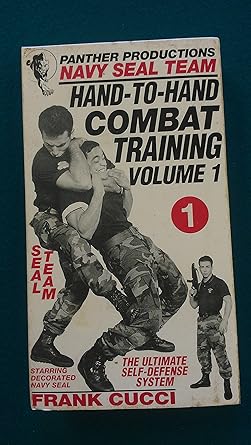
Similarly, there used to be a former US Navy SEAL who was selling instructional videos on hand-to- hand combat and related things to the civilian market. (I forget his name. The videos came from Panther Productions.) In an interview he admitted, "Actually the Navy SEALS often don't focus much on unarmed combat. In the Navy SEALS they feel if you find yourself in combat unarmed you screwed up big time somewhere."
Most who know about the connection between martial arts study and military effectiveness will admit that one of the biggest reasons to teach modern soldiers martial arts is that it raises their morale, not that it raises their direct combat effectiveness. As Nuno Pereira pointed out in our discussion, "If they are Elite they are trained for unit combat and stay cohesive. They are individually better than other troops but their strength is both psychological and physical."
More Hasslefree Figures miniatures
Having said that, I enjoy studying martial arts. It has many side benefits one of which is that it helps encourage me to stay active (not that it works too well for that as you can tell from my recent photos . . . but I recognize there is a problem there and occasionally engage in token exercise and other efforts to fix it. --eating two pieces of pizza instead of four, for instance. ) :-)
The study of history need not be a static, sedentary thing. For one thing, there's a lot there, like everything that ever existed, and much of it involved doing things.
Which brings us to the modern activity of "Historical European Martial Arts" (Also Known As "H.E.M.A."), a 600 year old book called "Fiore Dei Liberi's Armizare", and a medieval dagger known today (but not in medieval times) as "the Rondel."
Late Medieval European daggers
Going in reverse order, the Rondel is the modern name for a medieval dagger that resembled a large ice-pick more than it did a modern fighting blade. While most modern fighting knives are designed for slicing and cutting, techniques that can be deadly in most hand to hand combat situations, the rondel was adapted for fighting opponents in plate mail. A modern sharp bladed dagger would not do much damage against an enemy encased in medieval plate armor. Attempts to cut the plate would most likely do little damage to the person inside, while dulling the blade. By contrast, the long, narrow, sharply pointed rondel, if stabbed forcefully had a better chance of both piercing the plate than a wider knife, it also could slide through the cracks and joints in the armor, thus reaching the person inside. The rondel was a common weapon in the days when Europeans fought in heavy armor.
An excellent book on the use of the medieval
dagger as taught in the Fiore Dei Liberi
manuscript aimed at a modern audience.
But how exactly did people fight, or train to fight, with the rondel? How did they move? How did they hold their hands and move their fight when they did? Were their techniques and movements, or series of movements and techniques, which they practiced during training?
Although much of the details are conjecture, speculation, and, at best, educated guesses, we do have some information on these matters due to the existence of a 600 year old book known as Fiore Dei Liberi's Armizare. This was a hand drawn, Italian book dating from 1410 on fighting from the time, and it is often considered the oldest known comprehensive manual on hand to hand armed and unarmed combat in the European tradition. Four copies of the book, each slightly different, have survived and are located in museums around the USA and Europe.
Although the Fiore Dei Liberi manuscript describes
a good quality plastic reproduction of a
medieval dagger from the Cold Steel
company built for safer training
techniques for unarmed combat, swordsmanship (using the hand and a half sword of the time), axe, spear, as well as other weapons, a large portion of the work covers techniques for attacking with the rondel. For each of these techniques there is then a counter, called "a remedy" in the terminology adapted for the book, and then each of these counters has its own counter, charmingly called "the remedy master."
The work and its illustrations give clear descrptions of what each technique is supposed to look like at various points in the process. However, there is some debate over what happened or should have happened at the points in between the illustrations. Furthermore, as the art and techniques described in the book died out at some point centuries ago, unlike some Asian martial arts, there does not exist a lineage of living masters of the art who passed the teachings down from one student to another.
The author on the left preparing to defend
himself from a simulated medieval dagger
attack at a training session in the Boston area.
Nevertheless, some people today, in organized groups or as individuals, do attempt to recreate and practice the techniques in this work. For obvious reasons, what they are doing is an interpretation and may or may not be what the author of the book intended when he wrote and taught in the fifteenth century. But in most cases, students of the art have put much time and effort into learning what they can about body mechanics as well as fighting techniques, in order to try and achieve recreated techniques that are reasonably sound in practice and thus more likely to be close to what the original practitioners of this art did.
Such groups fall under the umbrella term of "Historical European Martial Arts" or H.E.M.A. I've participated in a small way with two different H.E.M.A. groups and enjoyed the experience. They were fun people and their gatherings were both fun and good exercise.
More on the Rondel and how it was used as taught in the Fiore Dei Liberi's Armizare is below.
An Excellent Series of Training Videos from the North West USA