Showing posts with label Kung Fu gaming. Show all posts

More Chop Sockey Pictures

 Some more photos from last week's solo test game of my "Chop Sockey! Kung Fu Miniature Wargame Rules." I made some changes to them this week. 


In other projects, I have done some studying on the history or pseudo of ninjas, dug several files of academic papers on a many subjects out of storage for possible projects, and begun some reading on the history of proto-scientific thought in China for a couple projects. I also submitted a couple book reviews on conspiracy thinking to the skeptical inquirer. And I primed a few figures that now need painting. 

Let me also off you think link to a piece of interesting history: 


As always, please consider buying my books. Thanks: Peter Huston's author page at Goodreads


Hand to Hand combat. The red poker chips indicate the figure has suffered a wound. 
This effects their abilities in several ways. 

Chop Sockey Kung Fu Miniature Wargame Rules test game --"We wuz just funnin' the China Man!" -After Action Report

Greetings. Hello there boys and girls. Well over a year or two ago, I began working on writing "Chop Sockey!!," a set of rules for kung fu comic or movie style wargames. The results are promising. A friend and I play tested them once, and then, like so many other things, along came the pandemic and that put an end to shared playtesting.


Alas! 

Having finished writing my book on Trump (yes, this is a plug, Feel free to buy it. Link below) and anxious to begin work on a new project, I pulled out the rules and gave them a test run playing solo. 

Basic scenario concept was to have a group of innocents being mistreated by bad people and some heroes need to come, intervene, and give them a chance to escape. 

Looking for suitable bad guys, I chose my recently painted "steam punky" Dead Rabbits gang. 

Now for the good guys, I realized that while I had suitable civilian figures, I had no rules for civilians, at least not yet.. (They shall be written soon and will be finished by next solo game.  I promise. The stats for civilians will give them very low, combat ability but high saves. This way, they don't really add much to combat but they do stay around long enough to be rescued.) 
For the good guys, I chose suitable Chinese Boxer rebellion or Taiping Uprising figures, creating a group of generic mobs of ten men with spears, swords, and muskets. I faced them off against each other at one corner of a four by four card table. I then put two suitable kung fu heroes at the farthest corner of the table. 
I called the scenario "We wuz just funnin' the Chinaman!" as an homeage to the classic 1970s TV show Kung Fu which chronicles the adventures of Kwai-Chiang Kane, a half breed Shaolin monk who wondered the old American west. An interesting show that shaped American images of kung fu and the martial arts in its early days, a common event in the series was that Kane would wonder into a western town. Soon after the local, inbred white trash with bad teeth would begin hassling him because he was Chinese and did not really fit in in that neighborhood, and go further and further with their hassling. Kane would inevitablly lecture them with Chinese philosophy (or the 1970s AmericanTV version of Chinese philosophy --think fortune cookie philosophy), that would fail, they would then attack him, and he would kick in half a dozen peoples teeth, leaving them on the ground whining "But we wuz just funnin' the Chinaman, and he done kicked our teeth all in!" 

Alas, good stuff. If you've never seen the show, your education is lacking something. 

Anyway, that's sort of what I was going for here. My results were mixed. 

Game Forces

The Dead Rabbits -a particular colorful group of White Trash and Irish Trash, no less

Unit One: Seven Dead Rabbits

            Classified as "Warriors" -each unit consists of a standard bearer with a Dead Rabbit on a pole and five men with clubs or swords and one with a firearm

Unit Two: Seven Dead Rabbits 

            Also classified as "Warriors" and equipped identically to the first unit although one was actually a woman and not a man -not that this makes any difference in these rules. It does, however, add color to the table top. 


Liam Angus McGutstab O'Heaney

            A widely feared drunken berserker. He was classified as a hero but given no chi points (He may conceivably have great chi. No one actually knows as he's simply too drunk and uncouth to know how to use it anyway if he does. I am, by the way, very proud of the figure. He's a conversion from, of all things, a Gaul gladiator, and I'm quite proud of him. See my old posts on the subject.) 

Ook Ook O'Brien

            A gorilla in a top hat. He escaped from the circus and was taken in by the Dead Rabbits. They were eager to have him, because they needed some better educated, more sophisticated, better travelled members and, being as he was widely travelled with the circus, he met the bill and filled the void.  

    Ook Ook is classified in the rules as a gorilla. Yes, there are rules for gorillas and other animals and I was hoping to try them out. Besides, it is a rule of thumb among wargamers, if you have a figure of gorilla in a top hat, put that figure in a game almost any chance you can. 


 The Good Hearted Chinese 

Three units of ten Chinese tong members classified as "fighters" armed with swords, spears and a few muskets. Each had a standard bearer. 

Two Kung Fu heroes at the far end of the table. These were unarmed but each had four points of "chi." 

Victory Conditions

The Chinese must escape off the far corner of the board with two thirds of their forces intact. 


Turn One


To determine which side went first a simple pair of dice were rolled for each side. The Dead Rabbits won. 

The turn sequence involves moving the units on a side, one by one, and then taking each unit through the entire turn sequence. 

Since the Dead Rabbits had four "units" -two seven man gangs, the gorilla, and the drunken berserker hero- this would mean four units would move through their sequence.

The first Dead Rabbit gang charged at the middle of the Chinese units. 
Being Warriors they had automatic activation and since they were charging they got double movement. Thus they moved ahead 8 inches, made contact with a group of Chinese seven or less inches away, and hand to hand fighting broke out.   


The attackers were classified as warriors and got 2 dice per figure or 14 dice total. 

The defenders were classified as fighters and got 1 dice each or 10 dice total. 

The dice were rolled and the Dead Rabbits inflicted 6 hits on the Chines tong members. The Chinese rolled their saving dice and only one of the six saved. Of the five hit, dice were rolled for the hit resul and three were wounded and two were dead. 

In that melee the Chinese caused three hits on the Dead Rabbits, killing two and wounding one. 


The second unit of Dead Rabbits charged the nearest unit of Chinese tong members and inflicted 7 hits. 


The hero and the gorilla were blocked from charging any of the other Chinese due to having the two melees taking place in front of them so they just advanced at normal speed and took up a position in support of the brawling gangs. 

Nevertheless, after the first turn, it was very obvious that the Chinese side was definitely way outclassed. Classifying all the forces on one side as "warriors," a designation intended for elite soldiers and their tribal or feudal equivalents, was a mistake. It had produced a very lop-sided battle. (Of course, I have thoughts on how to modify this in the future.) 

Chinese Phase of the First Turn


The Chinese side had five "units." These were the two heroes far to the rear and the three 10 man units of Tong fighters, two of which had taken heavy casualties already and were greatly weakened. 

Since the victory condition for the Chinese were to get as many figures to safety as possible, the untouched unit of Tong fighters decided to flee at double speed. In hindsight, I'm not sure this was a good idea, but, as they say, it seemed like a good idea at the time.

One of the heroes decided to charge into combat and to use lots of Chi to speed his entry. A normal charge or running move for a hero is 8 inches. For each point of Chi used, a hero can add 4 inches to his move. Using three points, he moved a total of 20 inches (8 + 12) and charged into combat with one of the Dead Rabbit gangs. He decided to go for broke and use his remaining chi point to add to his combat effectivness. 

Alas! Despite some heavy modifiers for that turn -the result of him using his chi- one hero versus seven warriors is a fight where the seven warriors have a strong advantage. A couple warriors left took hits and left the game but this meant that there were still five of them and one hero with no chi points, all alone against them and their nearby friends. 

The other hero saved his chi and moved 8 inches towards the center of the action. 

The remnants of the badly mauled units attempted to flee, but due to their wounds were not able. (If a character has a wound, he must consult a chart and pass a dice roll before perform actions such as fighting or moving. While a character can have multiple wounds, he must pass a dice roll for each and every wound or he cannot perform that action. The characters rolled badly and could not flee.)   


Turn Two -- Dead Rabbits Phase 


The two units of Dead Rabbits pursued or attacked the two units of Chinese tong members and the hero who supported them. They inflicted some more casualities but not enough to change the flow of the battle. 


The gorilla and the hero still found themselves waiting in support, watching, ready, but still not actually doing anything. 

Turn Two --Chinese Phase 

There were three units of tong fighters. 

One was undamaged but had chosen to flee. This was intended to increase the forces chances of meeting the victory conditions. In hindsight this might have been a bad idea, as the Dead Rabbits had already achieved their victory conditions, and it had become obvious that the scenario was probably quite unbalanced. 

The two Chinese heroes found themselves touching bases and formed a unit. This allowed them to activate and move together, as well as pool their dice in combat. 

Alas, when they entered combat, they found themselves outclassed by the large number of Dead Rabbits they were facing. Not only did they inflict little damage on the Dead Rabbits but one fo the heroes took hits and missed his saves and was killed and removed from the game. This left just one hero, one unwounded tong fighter, and several wounded tong fighters faced off against an overwhelming force of enemy warriors supported by a hero and a gorilla in a top hat.


Turn Three -FLEEEEE!!!

Seeing no other real option, the tong fighters fled the table. 


ANALYSIS

As a game, not terribly successful, but as a game testing or rule testing session a lot was learned about balancing scenarios. Several rules were tweaked afterwards. Others were added.  

And Please Consider Buying My Books. 
My Amazon Author Page

Thank you!

Chop Sockey! Kung Fu Movie Wargame Rules update

Greetings, I'm a bit behind on the weekly blog post so here's an update on my new project, Chop Sockey!! a set of wargame rules intended to recreated kung fu movie style battles. I've been working on it fairly steadily and while the pandemic and social distancing has put a kibosh on play testing the rules continue to be written.

I am at the moment writing the rules for vehicles and riding beasts and the concepts seem to be coming along well.

For a sneak peek, (no release date set yet) here's the current version of the table of contents with current page numbers:


 Table of Contents

Table of Contents

1. Introduction 2
But I don’t watch kung fu movies!! What the heck is a kung fu movie wargame??!! --- Notes for historical and other miniature gamers who have find these rules thrust in their hands. 2
2. Force Creation and Troop Types 3
Minions 3
Fighters 3
Warrior 3
Heroes (or Villains) 3
Specialists 3
Monsters, Creatures, and Animals 4
Forming Units 4
Chi and other special considerations 4
3.  Terrain 6
Rough Terrain 6
Dangerous Terrain 6
Elevated Terrain 7
Moving uphill 7
Moving downhill 7
Increased elevation 7
Impassible Terrain 7
Cover 8
Climbing fences and walls 8
4.  Battle Rules 9
Objectives 9
Sequence of Play 9
Turn Phases Table 10
Activation 10
Activating Units Table 12
Special Actions 13
5.   Movement 14
VEHICLES AND MOUNTED ANIMALS 14
Chi aided movement 15
6.   Combat and Close Combat 15
Basic Concept 15
Melee 16
Combat Sequence 16
Melee Weapons Table 17
Hits 17
Effects of Hits Table 18
Saving Throws 18
Wounds and the Effects of Hits 18
Wound Effects Table 19
Spectacular Hits and Morale Throws 19
Charge effects 20
Use of Chi in Combat 20
Breaking Free of Combat 21
ANIMALS IN MELEE 22
7.  Ranged Combat 23
Ranged Fire Hit Roll Chart 24
Ranged Weapons Chart 24
Firing Modifiers Chart 24
Running out of ammo 25
Chi in ranged Combat 25
Firing at Mixed Units 25
----Method One 25
----Method Two 26
Ammo –Running out of Ammunition 27
Catching thrown weapons, arrows, or bullets 28
8.    Morale 30
Morale Effect and Ending Moral Effect Check Table 30
Effects of Chi on Morale 31
Shaming 32
9.    Special Actions and Rules for non-combat challenges 32
10. Optional And Scenario Specific Rules 33
1. Multiplayer games (more than two sides) 33
2. Artillery and Crewed Weapons 33
3. Vehicles 33
4. Sorcerors, Technicians, Snipers, etc. 33
5. Creatures 33
10.   Duels and Tournaments 35
Single combat between heroes 37
Fighting Strategies. 37
Combat Results 38
REFERENCE CHARTS                                                                                                                     40

Chop Sockey! Kung Fu Wargame Miniature Rules playtest


Chop Sockey -Kung Fu Miniature Wargame Rules is one of my current works in progress. The goal was to create a set of rules that would be simple and fun to play while allowing for the flexibility needed to recreate the battle action of a classic kung fu movie or comic book. While much work remains to be done, we had our first real test play, and the basic concepts seem to work surprisingly well. 

Troops and characters are divided into four classes: minions, fighters, warriors, and heroes. 

Minions are those mobs of virtually useless combatants who get mown down by the dozen when the hero enters the room. 

Fighters and warriors are more ordinary people with the warriors being a step up from the fighters. Picture your elite samurai or commando-types and you have the basic idea. 

Heroes, well, heroes are heroes, except of course the heores who are really villains, and regardless highly skilled in kung fu and other deadly arts. They dominate the game, but that's the way it should be.

Close combat is handled by rolling large quantities of dice and comparing the difference in the die rolls. Aside from no hit at all, the results can be a hit, a deadly hit, or a spectacular hit. A spectacular hit is so frightening that it causes enemies to check morale. 


A long view of the set up for the game. At one of the table, you can see a jungle stockade where bandits have been holding women and children as prisoners. They are being held by an arch villain (a hero in game terms) and two five man units of bandits with sub-machine guns (fighters) and two five man bands of traitorous peasants (minions) who have allied themselves with the  bandits and their villainous yet highly skilled leader.
On the other side, are three bands of peasant militia (fighters), one with rifles and two with spears. They are led by three heroes and two native guides (specialists rated as warriors). Their goal is to cross the river, storm the stockade and rescue the prisoners.  

Another view of the set up. 


The evil bandits and their prisoners.


The good guys, come to rescue the prisoners.


The prisoners.


 A close up of the mountain bandits. These are Westwind's Montagniards (delightfully inaccurate Montagniards by the way) from their Vietnam range.


The game ended in a clear victory by the good guys who destroyed the villains and easily won the game. While some rules and stats need to be tweaked, 

Pulp Fiction Asian Bandits


People seem to like seeing pictures of nicely painted figures so here's a recent project. If anyone asks these are "modern day Pulp-fiction Asian fantasy Bandits" and should not be seen as representations of any historical or modern day people. The figures are actually 28mm Montagniards from Westwind Productions Vietnam War range and while nice figures, they don't resemble any photos of Montagniards from the period that I've ever seen. As for the Buddha in the tree trunk scenery piece that came from the aquarium decorations section of the pet area of a particularly large Walmart. Again, I refuse to comment on whether or not it's actually representative of anything anywhere.


Close ups of some of the figures. What's with the guy in the gasmask? No idea.
If someone has ever heard of SE Asian people donning gasmasks please let me know. 


Again, no idea if it's historically accurate but it'd make a great pulp fiction character. 


martial arts in wargaming

Some time ago, I had an interesting exchange with a European facebook friend, Nuno Pereira, creator of this http://kingscarbinepaintshop.blogspot.com/ and other blogs. Pereira, who is Portuguese, is enthusiastic about the study of Portugual's overseas colonial activities and conflicts over the last few centuries. He posts fascinating information on them in several forums devoted to wargaming and other historical activities. Not too long ago, he had, absurdly, gotten in trouble with the Facebook managers who felt some of his photos of 19th Century African warriors and other tribespeople who had interacted and fought with the Portuguese during that time were not properly clad for facebook viewers and defied Facebook values and he found his facebook privileges suspended for a few days.

I found this both absurd and hilarious and posted this video, partially in response. It dates from 1897 and shows Ashanti warriors demonstrating a "knife dance" at an exhibition that year in France. (The history of such exhibitions and museums, particularly in the pre-modern media world, is fascinating.)


This led to a discussion about whether or not and if so how to factor Capoeira, an Afro-Brazilian dance martial art with roots in Angola, and other martial arts into a miniature wargame. Should units that depict warriors or soldiers that have studied martial arts get higher stats  and ratings in hand to hand combat than those who have not?

Years previously, there was a discussion on this on the Colonial Wargames Yahoo group and I argued furiously over this issue until the moderator cut the thread. It's a topic I feel I know more about than many and have extra insight into --so, my two cents . . .


I believe this figure was produced by Grenadier years ago, perhaps Ral Partha, If someone knows please
let me know. I painted him to look like the character Shang Chi from the Master of Kung Fu comics.


First, "Martial Arts" and "Fighting Skills" are two different but overlapping things. If taught badly and out of context, studying martial arts can make you a WORSE fighter. But if taught well, then they can make a good fighter a better fighter. And to explore the topic more deeply requires an arbitrary defining of terms and splitting hairs. Would, for instance, bayonet drills or training be considered a martial art? I probably would not unless it involved an ever upward path for continuous development but if others disagree, I am not inclined to spend much time arguing with them over it.
A selection of 1980s era figures painted by me. Again the exact manufacturer is long forgotten.

 
Also hand to hand or close combat effectiveness depends on much more than simply knowing techniques and when to apply them. Aggressiveness and physical fitness, for instance, would also be factors that need to be taken into account, along with others.
A more recently manufactured figure from Hasslefree figures.

 Therefore, in my opinion, since people who have studied are martial arts are not necessarily better fighters than many others who have not, I would not give wargames figures a bonus for "knowing martial arts." You should just factor it into their close combat ratings along with several other factors.
These were originally manufactured by Obelisk Miniatures as part of their very interesting "tong" range, a range based on some classic photos of turn of the century San Francisco Chinatown. The range has been bought and is currently available from Tsuba Miniatures .
Additionally few martial arts are designed for mass combat. i.e. in the various Filipino martial arts of Kali, Escrima, and Arnis and different kinds thereof, there are a lot of techniques for knife dueling (this is one of the few martial arts that actually teaches these things) and they are a martial art. However, they are generally focused on one to one combat although less so than many other martial arts. Other martial arts are more focused on things like improving fitness, personal and spiritual development including confidence building, while others are basically contact sports. And there's nothing wrong with any of this. However, it does not mean you should automatically rate units that have studied martial arts as being more effective in hand to hand or close combats.


So, no, don't give your Angolan warriors a bonus because they study Capoeira. Give them a bonus because they are awesome fighters who happened to have studied Capoeira.

Seriously, there are many, many people out there walking around with martial arts credentials, convinced in their own minds that they are awesome superhuman killing machines who have no idea how to fight or what real violence looks like.


Another interesting thing along those lines is Wim Demeere, a prominent Tai Chi teacher in Belgium, wrote a blog post comparing martial arts and military combat. One key idea in it was "Military units are trained to fight as a team. Martial artists are trained to fight as individuals."You can read the whole essay HERE if you'd like. It's long but quite good. The part on teamwork is near the bottom of the page.

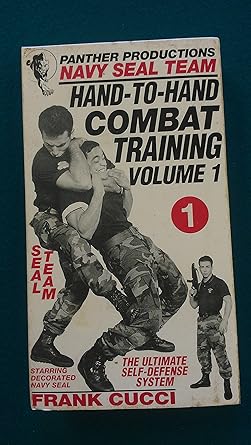
Similarly, there used to be a former US Navy SEAL who was selling instructional videos on hand-to-  hand combat and related things to the civilian market. (I forget his name. The videos came from Panther Productions.) In an interview he admitted, "Actually the Navy SEALS often don't focus much on unarmed combat. In the Navy SEALS they feel if you find yourself in combat unarmed you screwed up big time somewhere."   

Image result for panther productions martial arts US NAVY SEALS Frank Cucci


Most who know about the connection between martial arts study and military effectiveness will admit that one of the biggest reasons to teach modern soldiers martial arts is that it raises their morale, not that it raises their direct combat effectiveness. As Nuno Pereira pointed out in our discussion, "If they are Elite they are trained for unit combat and stay cohesive. They are individually better than other troops but their strength is both psychological and physical."
More Hasslefree Figures miniatures
Having said that, I enjoy studying martial arts. It has many side benefits one of which is that it helps encourage me to stay active (not that it works too well for that as you can tell from my recent photos . . . but I recognize there is a problem there and occasionally engage in token exercise and other efforts to fix it. --eating two pieces of pizza instead of four, for instance. ) :-)

Historical Miniature Wargaming --Preparing for a Game

Historical Miniature Gaming and Keys to Good Gaming 

Preparation for the Game


An important part of any historical miniature game is preparation. Experienced gamers know this. (So you guys just enjoy the pictures please. Maybe the less experienced will learn something or get some ideas.) Let me suggest the following as common things to consider when preparing for a historical miniature game.

A large multi-player game of Bolt Action that involved
many players recreating a portion of the World War Two
D-Day Normandy landings. This game took place at the
Schenectady Wargamers monthly game-a-thon.

1. Historical research. 

Historical games are best appreciated by people who know enough history to put things in context. Of  course, imagination is part of these things too, but knowing at least a little of the history of what's being simulated can go a long way to increase appreciation of the game. 

Some games are recreations of actual historical battles but most are imaginary or hypothetical battles set during a particular period of history.

2. Collect and paint some miniatures


A Scottish Highland force from the 1745 Uprising. Figures are Old Glory 25mm painted by Doug Bradt.

To play most miniature games, miniatures are generally required. Of course, some people substitute things like tokens, cardboard counters, clothes-pins, coins, buttons, or whatever seems to be at hand, but I for one, just don't get it. Without miniatures why not just play boardgames?  

And then there are those people who buy expensive figures and put them on the gaming table  without painting them. I for one, don't get it. It's like those people who drink fine wine from paper cups.

No! No! No! If you're going to play historical miniatures games, then it's best to get some historical miniatures and paint them. (Some people hire others to paint them. Enh . . . I'm not sure what I think about that. It's kind of like cheating maybe in my opinion, but, then again, what do I really know?


3. Select and learn rules

A French and Indian Wargame
Of course, to play a game, you need to have some idea of what the rules are. Or do you?

If a historical wargame is using a set of rules that produce a historically accurate result, and you are reasonably familiar with the history and the tactics and troop types of the period being gamed, and there are people present who are feeling friendly and tolerant of new players and who know the rules well, often you can sort of play along when your turn comes by telling the other players what your troops or units of troops intend to do, and then guide them along as they do what their historical counterparts would have done.

Of course, if you don't know the historical tactics and types of units, strange things can happen. I recall once playing a World War Two skirmish game using a set of rules called Fireball Forward. This was a pick-up game played one afternoon at a Boston area store called The Hobby Bunker in Malden, Massachusetts, so new players were welcome. I was not terribly familiar with either the rules or tank tactics of the period and to make it even worse, the terrain was the hedgerows of Normandy, home to some very fierce fighting during the Second World War. ( The Normandy hedgerows were among the most unusal and challenging terrain of word war two. For an interesting PDF on the subject you can click here.  It is intended for American school children taking history classes.)  Not only that the game was set at night and the rules provided for this by giving all the players limited ability to find each other's units.

I figured that it woul dbe a good idea to send some of my tanks forward at high speed to scout out the situation and find the enemy. Unfortunately what I learned is that people who were inside a world war two tank travelling at high speed at night can not see or hear much of the world outside the tank. The result was that I learned nothing and soon got ambushed and lost the tanks. Oh well. Not good, but probably a mistake more than one naive, inexperienced American takn commander of the time made as well. (Again, consider reading the above linked PDF on the subject.) .

A quick game without scenery. This was just to try out some ideas for a set of rules I am writing to simulate Kung Fu movie action. The figures come from a variety of manufactures, Hasslefree martial artists, Obelisk Tong gangsters, Wargames Foundry Taiping War figures and Frontier Boxer Rebellion figures. 

4. Acquire scenery 

This is another area where some people skimp. On the other hand, good scenery can make or break a good gaming experience. Model trees, model houses, terrain, and other pieces of scenery are an important part of the hobby. 
  

Probably the most elaborate piece of scenery I own. a home-built gaming model of a Roman Gladiatorial arena. The photos are of a game using Habet, Hoc, Habet rules simulating four condemned men (miniatures from Crusader Miniatures) fighting a lion (I'm having time remembering who made this. If someone recognizes it please let me know.

Trump and Musk -What is motivating them? What is their end goal? Partial thoughts First

Trump and Musk -What is motivating them? What is their end goal? Partial thoughts First . . . what the heck is going on here? What are Donal...